Inflatable Warehouse vs Steel Frame Warehouse: 2026 Cost & Installation Guide
A practical comparison for logistics, manufacturing, and event industries in the United States
As logistics, manufacturing, and retail industries expand rapidly across the United States, businesses increasingly require flexible warehouse solutions that can be deployed quickly without the cost and time of permanent construction.
Two of the most common temporary warehouse structures are steel-frame warehouses and inflatable warehouse buildings.
Inflatable warehouses are also commonly referred to as warehouse tents or fabric warehouse structures, providing large covered storage space while remaining portable and fast to deploy.
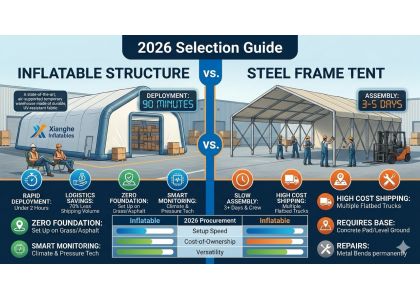
While both provide large covered spaces, they differ significantly in installation time, logistics cost, weather resistance, and total cost of ownership (TCO). This guide explains the key differences to help American businesses choose the right structure for their projects in 2026.
What Is an Inflatable Warehouse?
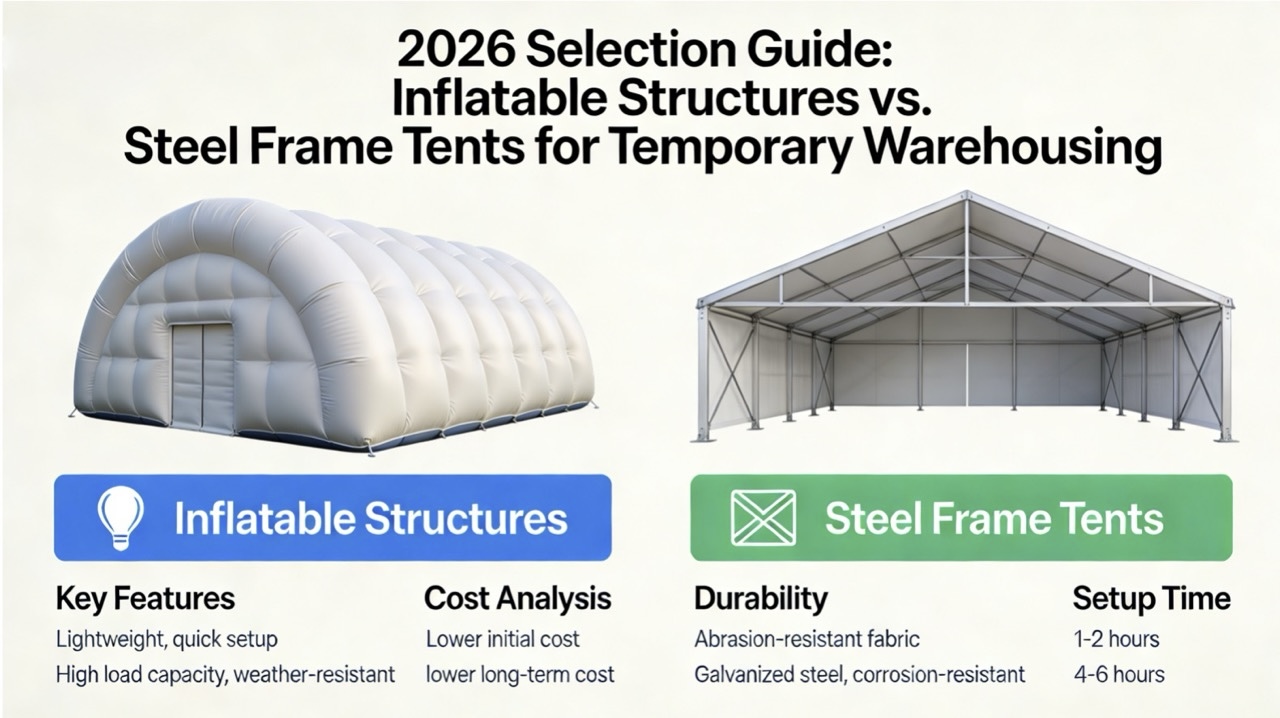
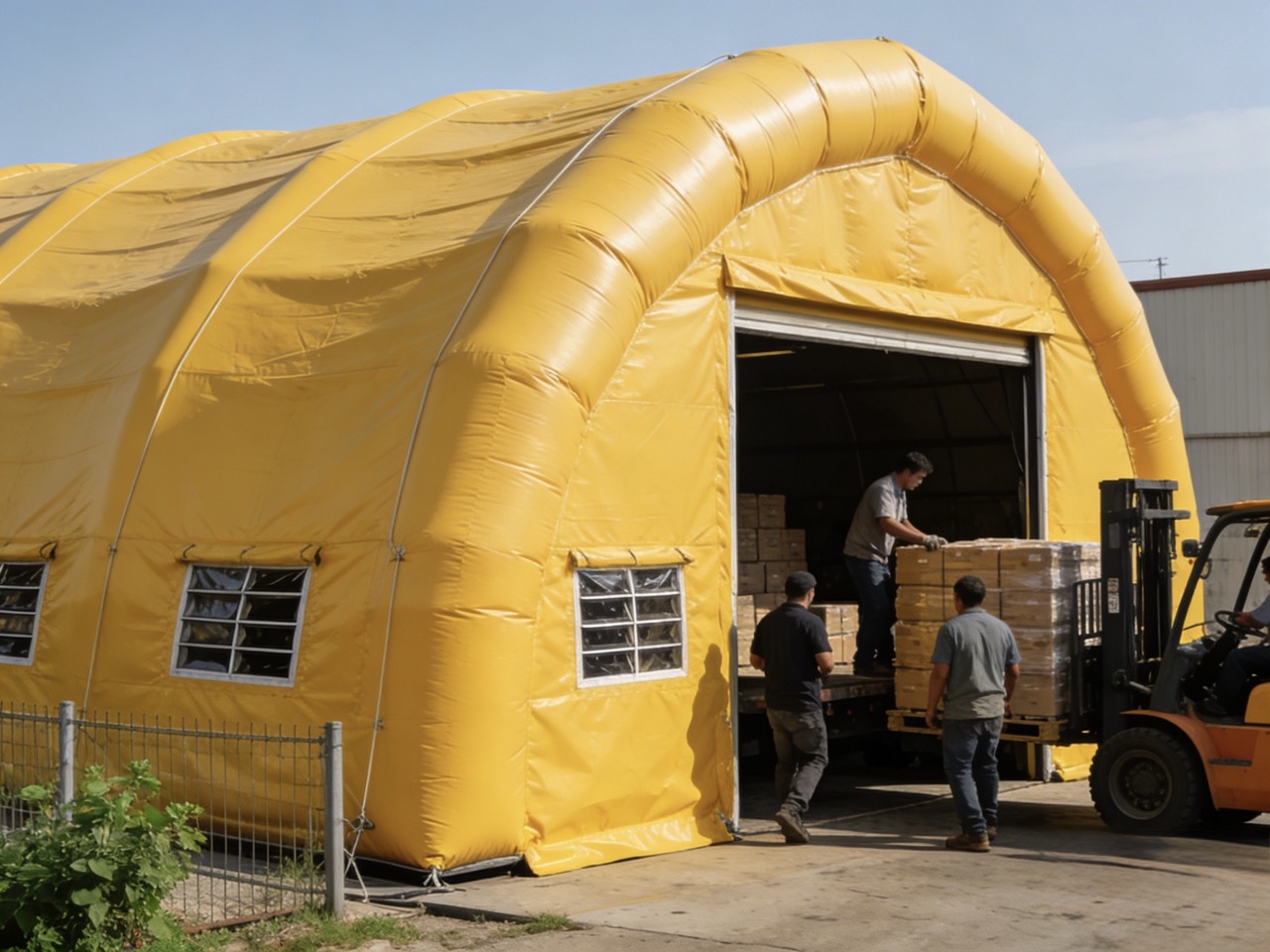
An inflatable warehouse is a temporary industrial structure supported by high-pressure air beams and reinforced PVC fabric. These structures create large clear-span spaces without heavy steel frames, making them lightweight, portable, and extremely fast to install.
Because of their flexibility and mobility, inflatable warehouses are widely used for temporary logistics hubs, emergency storage, construction sites, and large-scale events.
1. Installation Speed: Why Deployment Time Matters
In fast-moving industries such as logistics and event operations, the time required to build a warehouse directly impacts operational costs.
- Steel Frame Warehouses
Typically require a trained installation crew, structural assembly, and mechanical lifting equipment. A 5,000 sq. ft. warehouse usually takes 3–7 days to install. - Inflatable Warehouse Structures
Air-beam structures are designed for rapid deployment. Most systems can be installed by two people within 1–2 hours using electric air pumps.
For emergency storage, seasonal warehouses, or temporary logistics hubs, inflatable structures provide significantly faster deployment.
2. Transportation & Logistics Cost
Transportation plays a major role in the total cost of temporary warehouse structures.
- Steel Frame Structures
Require multiple truckloads to transport steel trusses, connectors, and roofing materials, leading to higher logistics expenses. - Inflatable Warehouses
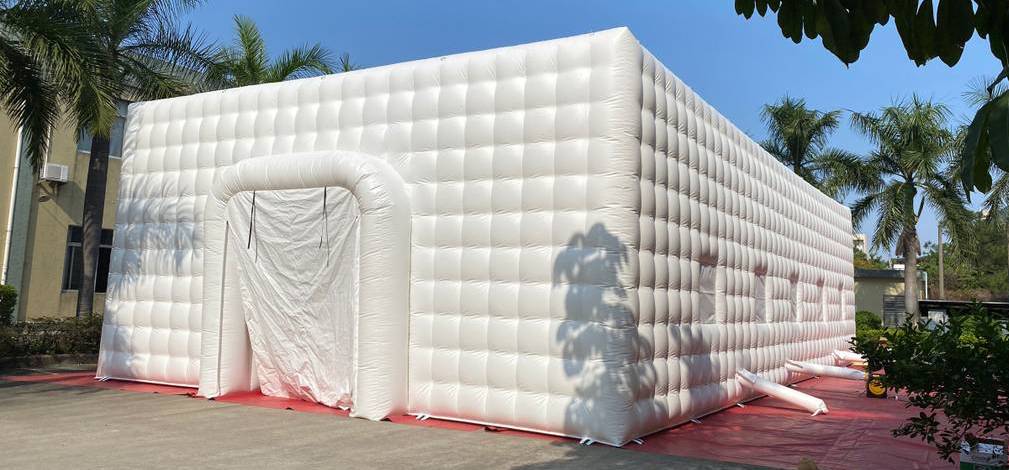
When deflated, inflatable structures compress to a small volume and can often be transported on standard pallets using LTL freight.
For companies operating across multiple locations, inflatable structures provide a major advantage in mobility and storage efficiency.
3. Structural Engineering & Weather Performance
A common concern for buyers is whether inflatable buildings can withstand harsh weather conditions.
- Steel Frame Warehouses
Rigid truss systems provide strong structural capacity and are suitable for long-term installations. - Inflatable Air-Beam Structures
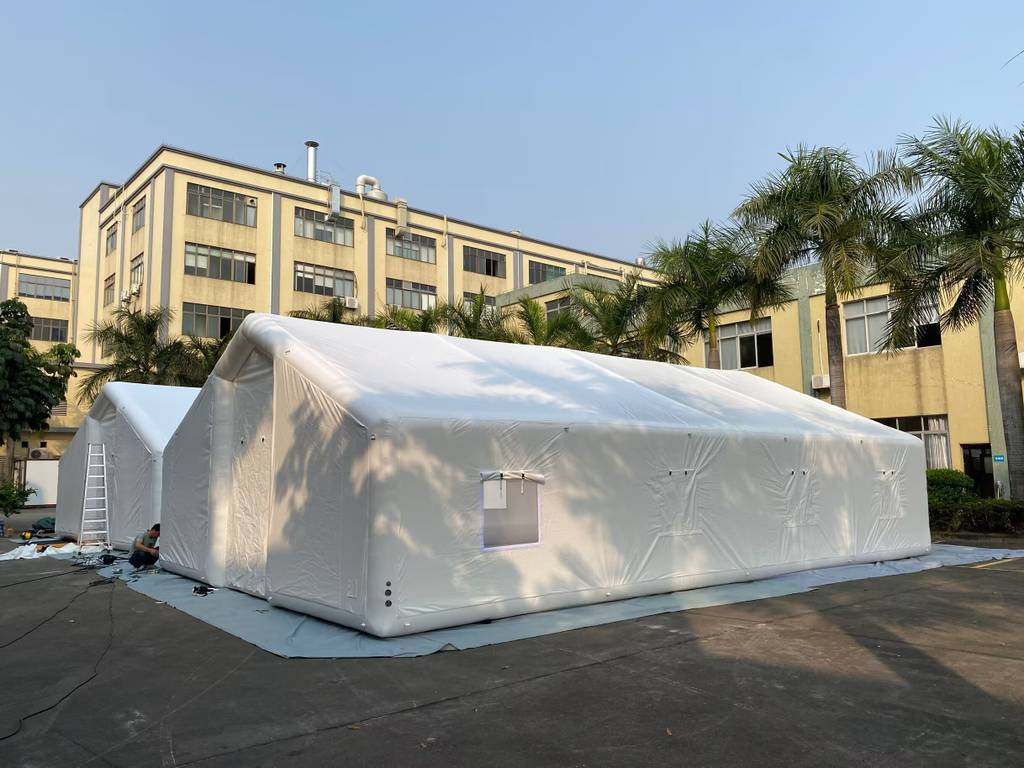
Modern inflatable buildings use reinforced PVC fabric and high-pressure air beams. These beams absorb wind energy rather than resisting it rigidly, reducing structural stress.
High-quality inflatable warehouses can withstand wind speeds up to 60 mph (96 km/h) when properly anchored.
Industrial fabric used in inflatable warehouses is typically UV-resistant, waterproof, and compliant with fire safety standards such as NFPA-701.
2026 Comparison Overview
| Feature | Steel Frame Warehouse | Inflatable Warehouse |
|---|---|---|
| Installation Time | 3–7 Days | 1–2 Hours |
| Labor Required | 5+ Workers | 2 Workers |
| Transportation Cost | High | Low |
| Mobility | Semi-Permanent | Highly Portable |
| Typical Lifespan | 15–20 Years | 8–15 Years |
Best Use Cases for Inflatable Warehouses
- Emergency response and disaster relief storage
- Temporary logistics warehouses
- Construction site storage
- Exhibition and trade show halls
- Seasonal retail inventory overflow
- Military or government temporary shelters
Frequently Asked Questions
How long do inflatable warehouses last?
Industrial inflatable structures typically last between 8 and 15 years depending on climate exposure and maintenance.
Do inflatable warehouses require constant air pressure?
It depends on the structural design. Inflatable warehouses generally fall into two categories:
Air-Supported Structures: These buildings use continuous air pressure generated by blowers to support the roof. The system must remain powered to maintain internal pressure.
Air-Beam Structures: These use sealed high-pressure air beams as structural supports. Once inflated, the beams remain airtight and do not require continuous air supply.
Air-beam structures are increasingly popular for temporary warehouses because they combine fast installation with lower energy requirements.
Are inflatable warehouses safe in strong wind?
Yes. Most industrial inflatable warehouses are engineered to withstand wind speeds of up to 60 mph when properly anchored.
How much does an inflatable warehouse cost?
Pricing depends on size, materials, and customization requirements. For short-term projects, inflatable warehouses are often more cost-effective than steel frame structures.
